






MA// BLOG
FIVE OF THE BEST FOOTBALL BOOKS
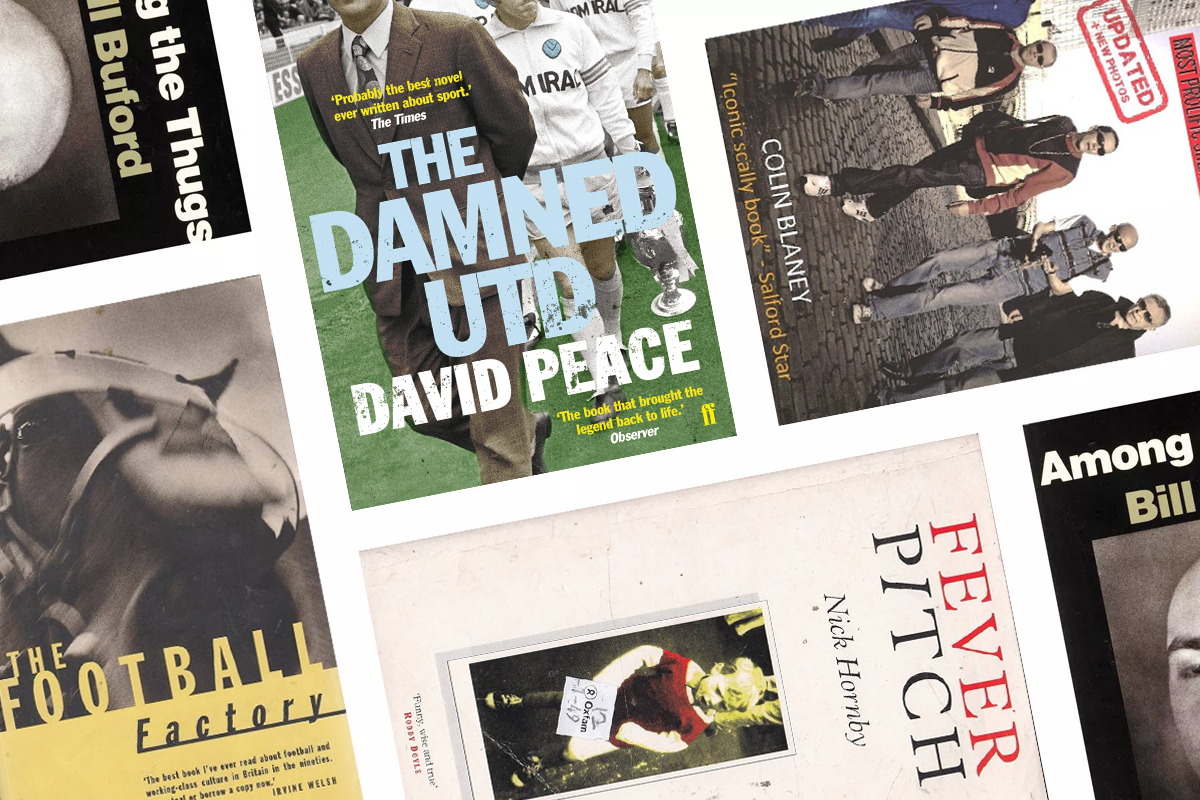
Football has always generated stories. Some are shouted across concourses, some are muttered on long train journeys home, others live only in the heads of the people who were there and never quite got over it. For a long time, though, football struggled to be taken seriously on the page. It was seen as something visceral and fleeting, best experienced live and then forgotten, not something you sat down with in a library. The books below changed that. Not all in the same way, not all with the same intentions, but each of them helped drag football literature out of the fanzine and onto the bookshelf, without sanding down what made the game rough, strange and compelling in the first place.
Among the Thugs by Bill Buford (1991)
On the face of it, Among the Thugs still sounds like a bad idea. An American writer embedding himself among English football hooligans, following firms home and away in the dying days of the old First Division. You can almost hear the scepticism before you open the book. What could he possibly understand about this world?
As it turns out, quite a lot. Buford’s outsider status is actually one of the best things about Among the Thugs. He watches English football culture with a mixture of fascination and fear, documenting every scene with the clarity of someone not numbed by familiarity. This is football before the Premier League, before sanitised stadiums and brand-endorsed rivalries. Grounds are falling apart, policing is openly hostile, and violence is simply part of a day at the football.
The book is notorious for its most extreme moments, including a horrifying account of a hooligan sucking the eye out of a policeman’s face. But Among the Thugs is not just a collection of shock stories. It is a serious examination of crowd psychology, tribalism and how easily people surrender individuality to the collective. Buford captures the strange, intoxicating logic of the mob without ever fully excusing it. Few books have documented the intensity of English football culture with such unflinching honesty.
Fever Pitch by Nick Hornby (1992)
If Buford showed the outside world how frightening football culture could look, Nick Hornby did something just as radical by showing how quietly all-consuming it could be. Fever Pitch was a watershed moment in football literature, not because it glamorised the game but because it took it seriously as an emotional force.
Hornby’s account of growing up supporting Arsenal treats football fandom as something that structures a life. Matches are not just events but reference points for memory, relationships and personal development. What makes the book endure is its balance. Hornby respects football’s working-class roots without turning them into caricature, and he also makes the case that football appeals to people across class lines because obsession, routine and hope are universal experiences.
Crucially, Fever Pitch proved that football belonged on bookshelves as much as it did on the terraces. It showed that loving football did not disqualify you from being reflective or intellectually curious. In doing so, it opened the door for an entire generation of writers and readers who had always suspected that the game meant more than anyone outside it seemed willing to admit.
The Football Factory by John King (1995)
John King’s The Football Factory is often overshadowed by its 2004 film adaptation, a cult favourite that is frequently misunderstood as an endorsement of the violence it depicts. As good as Danny Dyer and Neil Maskell are in the film, the book is actually better, and far more disturbing. Published in 1995, it stands as one of the most underrated novels in late twentieth-century British literature.
King was a contemporary and associate of Irvine Welsh, the Scottish writer who wrote Trainspotting and captured the voice and despair of a generation through the lens of drug addiction. The Football Factory occupies a similar cultural space, but instead of heroin, it’s football. Like Welsh, King writes from inside the subculture, using repetition, rage and dark humour to immerse the reader in a world that feels both absurd and terrifying.
Set among Chelsea’s Headhunters firm, the novel does not offer redemption or moral clarity. Instead, it documents obsession as a closed loop. The violence is cyclical, the bravado exhausting, and the sense of belonging as addictive as it is destructive. King’s prose is deliberately relentless, mirroring the mindset of his characters. It is not a comfortable read, but it’s honest, and its refusal to soften its subject matter is precisely what gives it lasting power.
Grafters by Colin Blaney (2004)
By the time Grafters was published, English football had changed. The Premier League era was in full swing, stadiums were safer, and the most of the legendary hooligan firms were beginning to pass into legend. Colin Blaney’s memoir looks back at that world from the inside, charting his life as a football fan whose matchdays bled into criminal enterprise.
Blaney is not trying to write great literature. His sentences are blunt, his reflections limited, and his focus firmly on the next story. But what stories they are. Grafters is a breathless account of the links between football firms and organised crime, particularly in northern England, and it captures the casual way illegality could become part of everyday life.
The book has achieved cult status among football fans, passed around pubs and away coaches rather than discussed in seminars. Its appeal lies in its pace and lack of pretence. Blaney writes as he lived, moving quickly from one caper to the next, and while that may rule him out of any literary canon, it makes Grafters an authentic document of a time and place in football culture that is already fading from memory.
The Damned United by David Peace (2006)
David Peace’s The Damned United takes football writing in a different direction altogether. Rather than the terrace or the firm, Peace focuses on the dugout, fictionalising Brian Clough’s doomed 44-day spell as manager of Leeds United, a club he openly despised.
The book has been criticised, often correctly, for its loose relationship with historical fact. It should not be read as biography. What it offers instead is psychological truth. Peace writes Clough as a man unravelled by pride, insecurity and obsession, trapped inside his own legend. The prose is fragmented and repetitive, reflecting a mind spiralling under pressure.
Despite its inaccuracies, The Damned United remains one of the most compelling portraits of football management ever written. It captures the loneliness of authority and the cruelty of failure in a sport that rarely allows space for vulnerability. The later film adaptation is excellent, but the novel’s claustrophobic interior voice makes it the more unsettling experience.