



MA// BLOG
IN PRAISE OF FOOTBALL FAN STICKERS: LONG LIVE THE UNDERGROUND
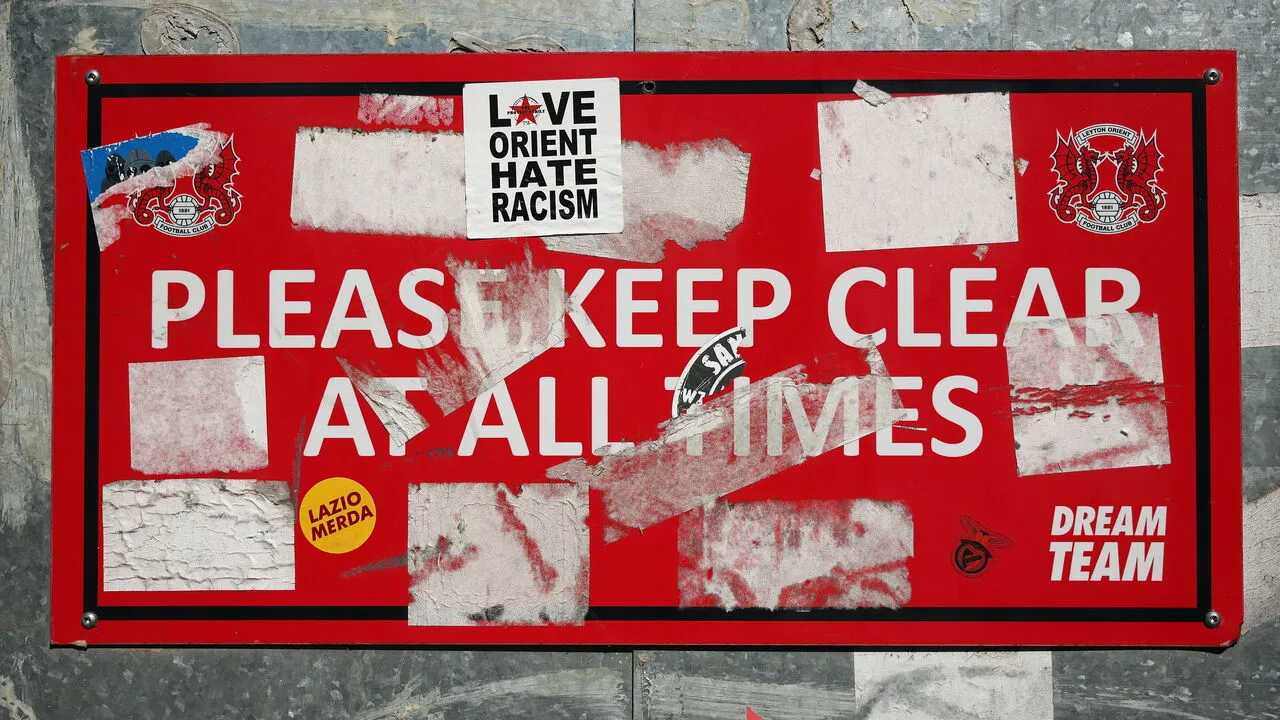
Anybody wanting proof that grassroots football culture is alive and well in 2026 need only look at the nearest pub toilet cistern. Fan stickers – not the Panini ones – have been around for a while, but right now we seem to be enjoying some kind of golden age for these small pieces of adhesive paper. Fan stickers are getting funnier, bolder, weirder. Part-time graphic designers all over the country have found a rich vein of form.
Stickers say so much with such little space. They’re a low-cost outlet for the slightly warped humour of the fanatical supporter, a vital corrective to the sterile, corporate nature of the modern game. They’re also a democratic medium that puts every fan on an equal footing – followers of, say, Aldershot Town, are working with exactly the same materials as Arsenal fans. Their team may never play there, but supporters of an Isthmian League Premier Division club can still leave their calling cards all around the San Siro or the Bernabeu.
Sticker culture, as documented in books like TIFO: The Art of Football Fan Stickers and on social media accounts like @ontourstickers, is a direct line to underground fandom: endlessly creative, a little bizarre, sometimes un-PC, frequently hilarious. On an average away day you might spot many different types of stickers, deployed for different purposes. Here are a few of our favourites:
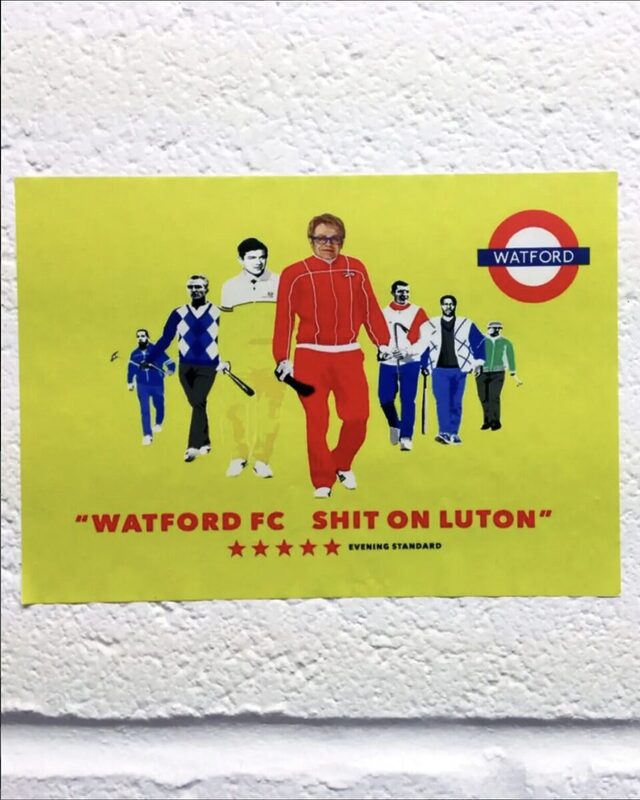
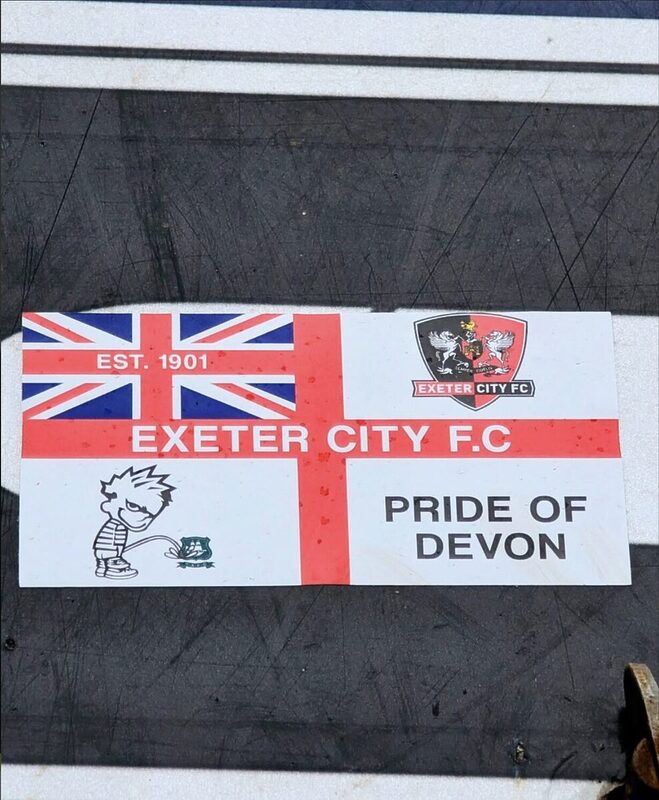
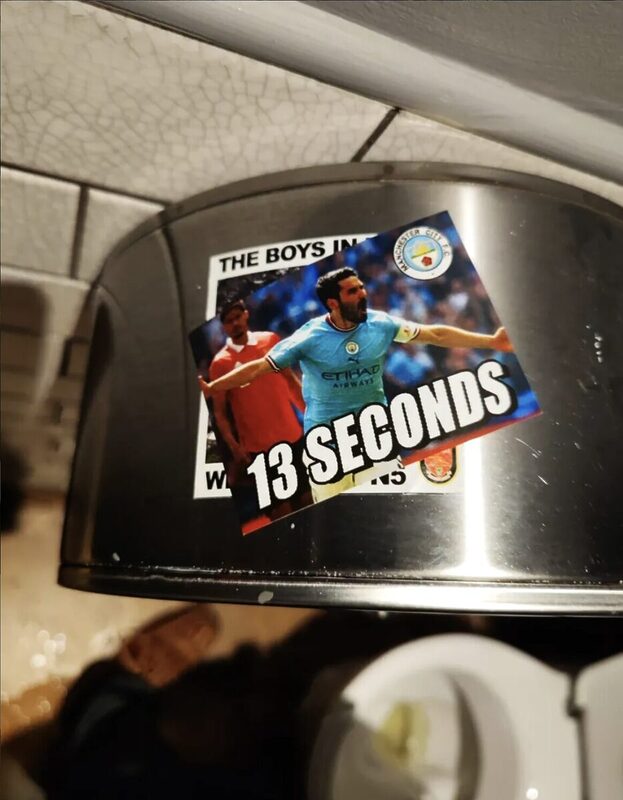
THE RIVAL FAN WIND-UP STICKER
Taking the piss is something that football fans do better than anyone else. This is a mandatory match-day activity sharpened into a working-class art form, shaped by decades of tribal loyalties, noisy terraces and the irreverent humour of knowing your team’s probably going to lose and loving it anyway.
Stickers are where we find the purest expression of the piss-taking impulse. They are an offensive chant in semi-permanent form, an opportunity to paste your best insult on every street surrounding the enemy’s stadium, and in all their favourite pubs as well.
The digs traded by rival fans usually revolve around tried and tested topics: which club truly represents the city, which has achieved more success on the pitch, and frequent allegations of deviant sexual behaviour. You know the material. Sticker designs, however, give these well-worn themes an infinite number of variations. Although some images pop up again and again (e.g. the massively overused silhouette of the “Calvin” character urinating on another team’s badge), more frequently fan groups will use stickers to put a fresh spin on the universal grievances that exist between rival clubs – and that’s the fun part.
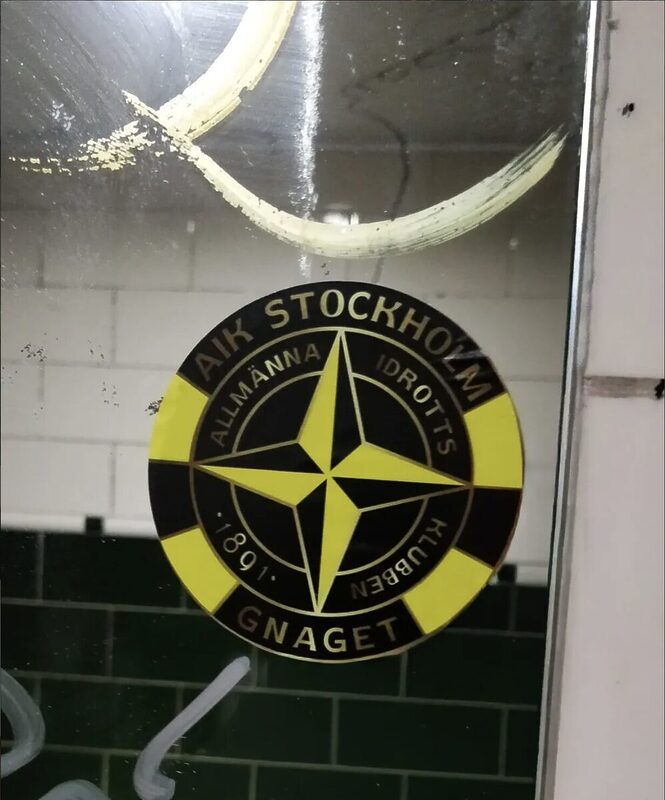
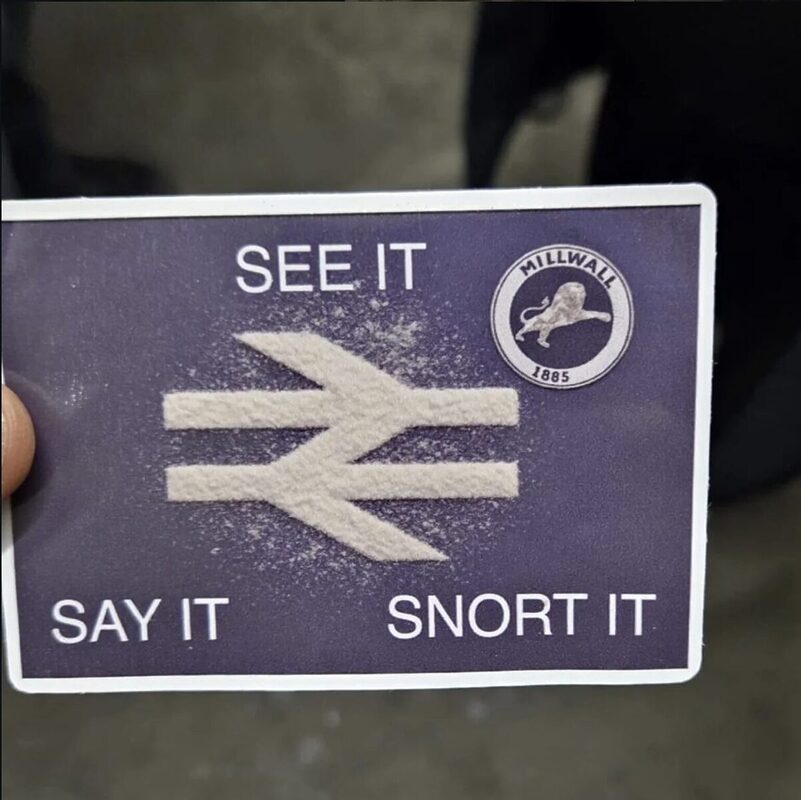
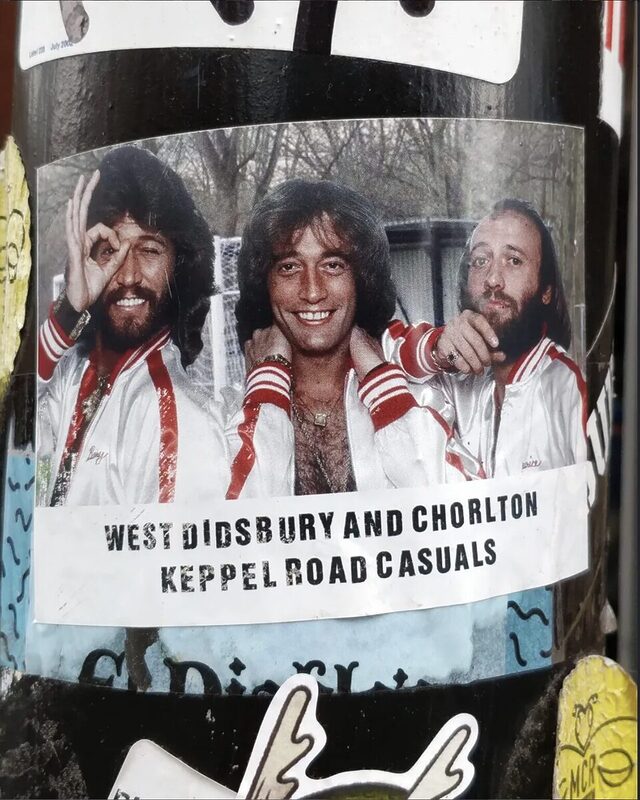
THE CLASSIC ‘WE WERE HERE’ STICKER
Away days are the perfect excuse to visit all kinds of random places. How many of us gained almost all our geography knowledge – across the UK, Europe and beyond – by going to football grounds? FA Cup or European fixtures can take us to places we’d otherwise have no reason to be.
Some stickers reflect this simple thrill of being in a new place for a short time with your best mates. The sticker itself might be little more than the club badge, but there’s something about glimpsing a half-familiar logo or slogan in an airport, train station or on a random street sign that all fans relate to. It’s a secret language shared across countries, leagues and traditional rivalries – non-football people will scarcely notice them, but if you know, you’ll spot the stickers from the other end of the street. They’re hidden messages passed between fans saying we’re out here too, doing the same thing you’re doing.
THE STICKER AS STATEMENT
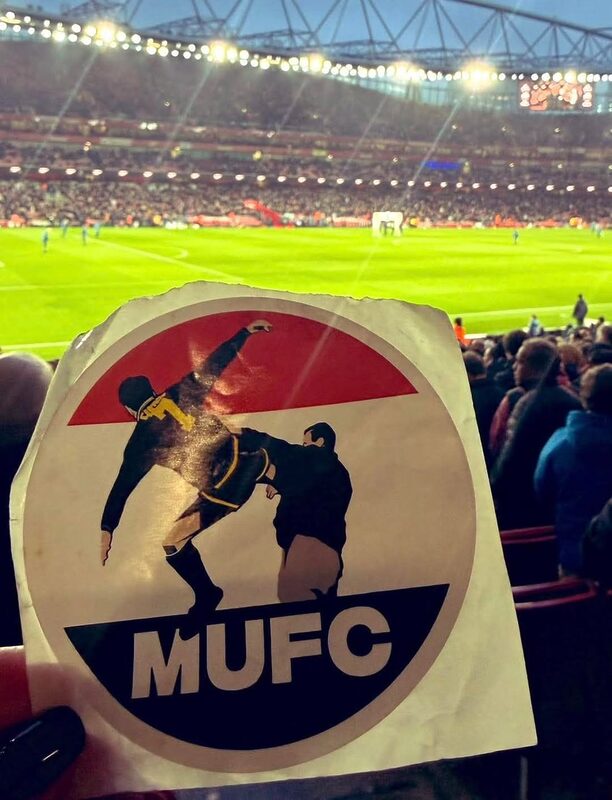
Man United’s game away at Arsenal on Sunday January 25th was played on the 31st anniversary of Eric Cantona’s kung-fu kick, when he attacked Crystal Palace fan and alleged far-right hooligan Matthew Simmons at Selhurst Park. Stickers bearing an image of the controversial incident, simply labelled MUFC, were spotted in the away end at the Emirates. On the same day, this famous image also appeared on a “hacked” billboard created by street artist Foka Wolf, who described it as a homage to Cantona and “his contribution to football, art and kung-fu kicking dumbfucks”. But it’s interesting that the sticker, much smaller and with a simplified graphic silhouette, feels like the more powerful expression of the idea.
Whether you agree with Cantona’s actions or not, when this image is applied to the identity of the club, it becomes something more – not just a celebration of a maverick player’s infamous moment, but a call back to United’s pre-Glazer glory era, a defiant reminder of the willingness to take on (perhaps too literally in this case) any adversary.
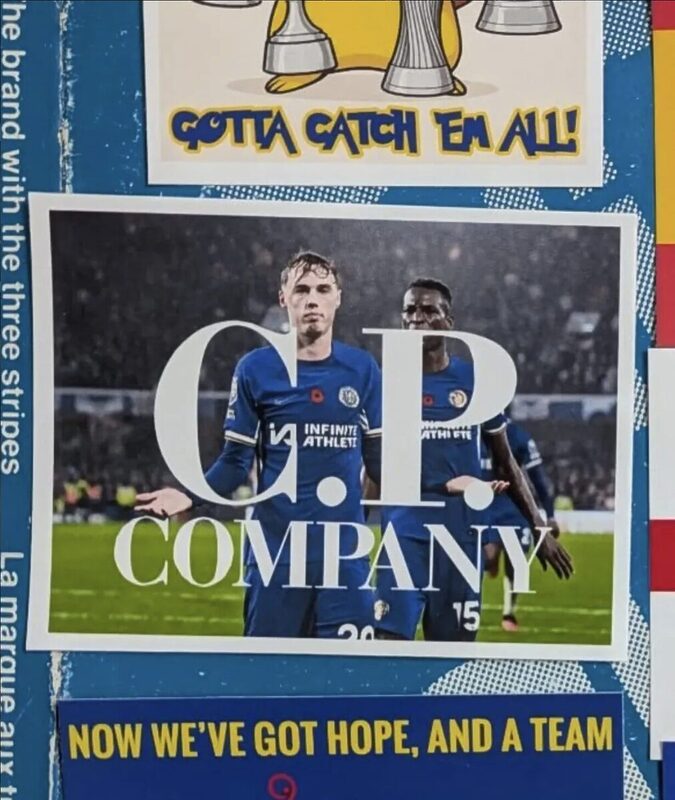
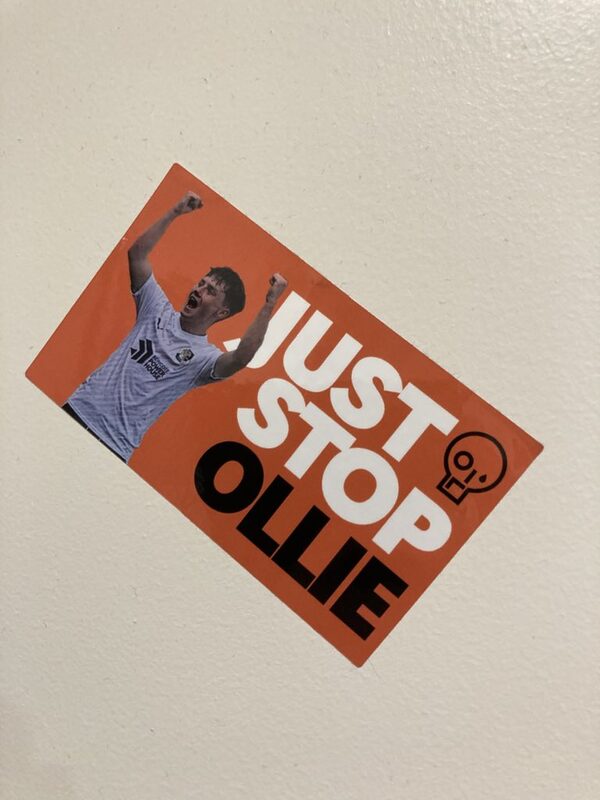
Sticker designs can be political, as this shows, although typically we see political slogans twisted to celebrate a club or player, stripped of their original context in favour of a more irreverent world view: York City’s classic Just Stop Ollie, for example, or the recently spotted “Brittain First” in praise of Middlesbrough full-back Callum Brittain. If there’s a joke to be made, rest assured fans are going to make it – and you’ll see it soon on a lamppost, road sign or toilet door near you.
PHOTO CREDIT: PROF. ANDREW GROVES