





MA// BLOG
THE RISE OF TIFOS IN ENGLISH FOOTBALL: INSIDE THE NEW ERA OF FAN CULTURE
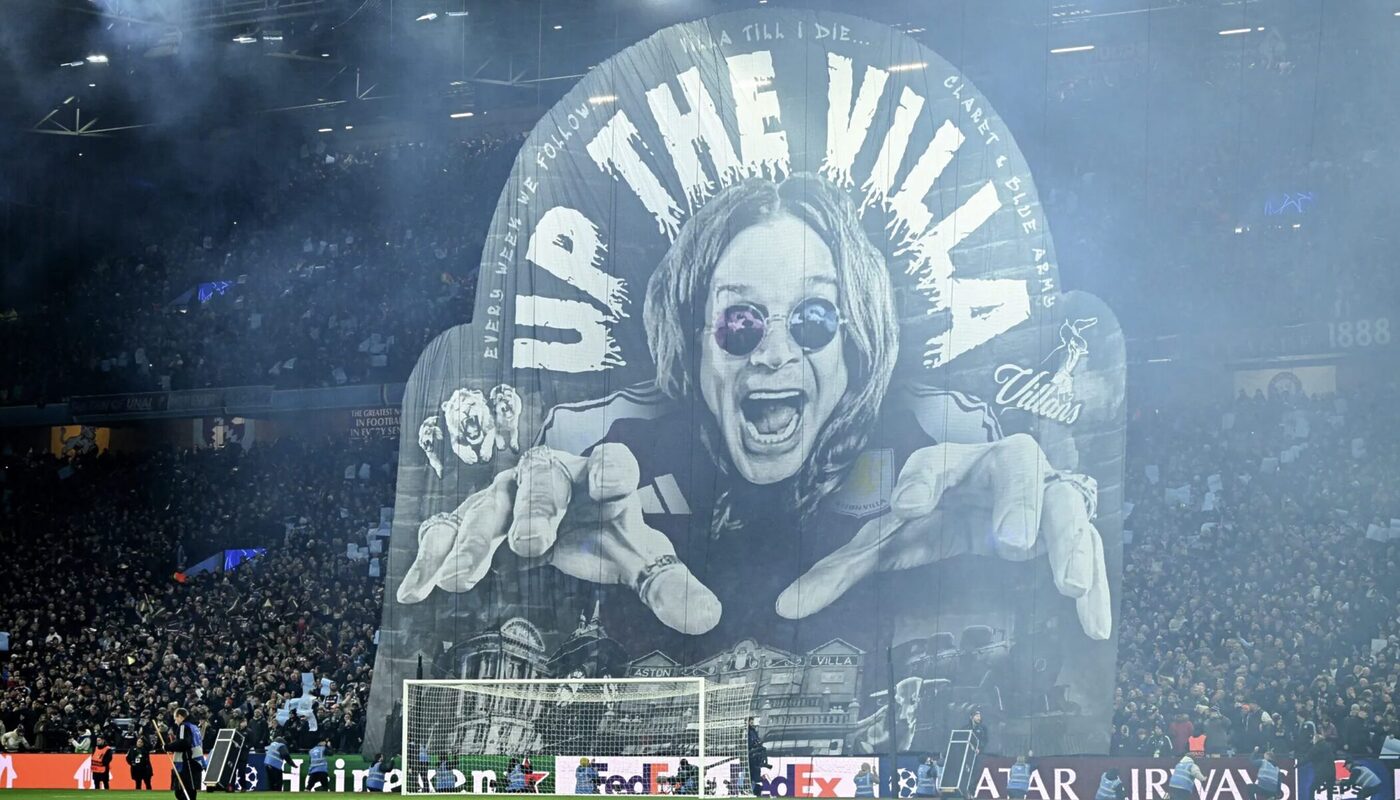
After a few seconds of confusion, you realised what you were looking at. The Holte End at Aston Villa had become something else entirely. A giant banner unfurled from the upper tier, stretching down over rows of supporters, the image snapping into focus as it reached the bottom. For a moment, the game itself felt secondary. Players stood waiting, glancing up. Phones came out in the stands. The noise shifted, not louder exactly, but fuller, like the ground had taken a breath.
This was a Tifo. Or at least, English football’s increasingly confident attempt at one.
The term itself feels slightly out of place in this country, and maybe that’s part of why it’s worthy of discussion. “Tifo” comes from the Italian tifosi, meaning supporters, rooted in a word historically associated with fever or delirium. In other words, it describes the kind of all-consuming, slightly unhinged devotion that football fans have always insisted is perfectly normal. In Italy, though, the word refers more broadly to the act of support itself. The idea of using “Tifo” to describe a specific type of banner or display is, strictly speaking, a foreign misinterpretation. Some European purists will tell you that calling a big flag a “Tifo” is a bit like calling every vacuum cleaner a Hoover. It’s technically incorrect, but it is widely accepted.
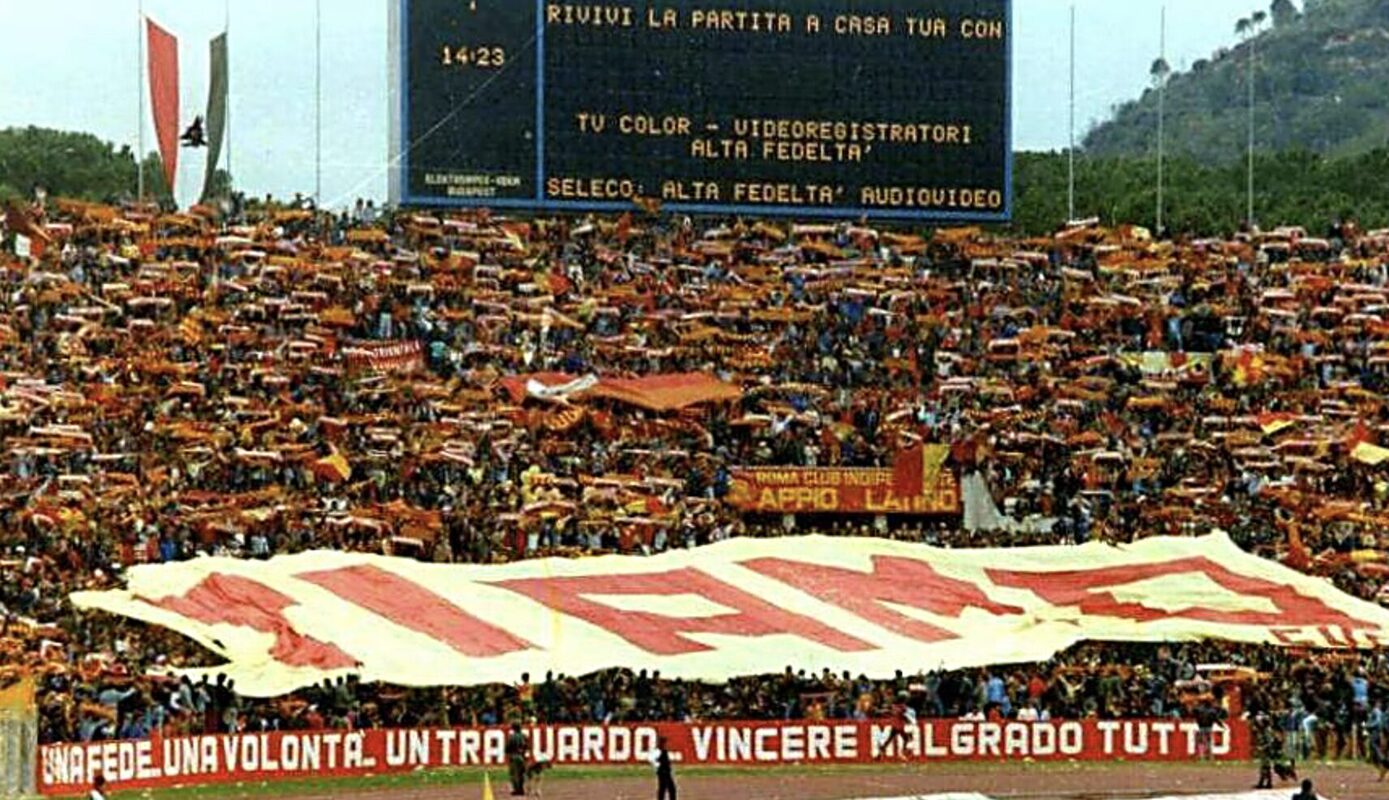
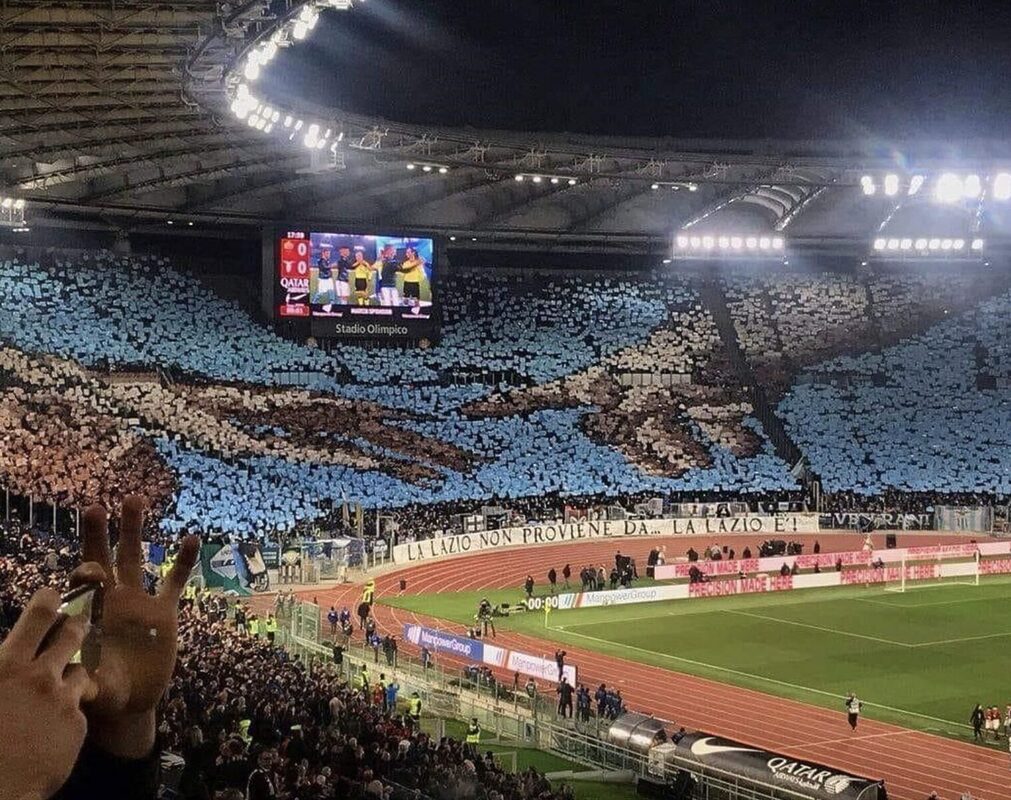
What people mean when they say it, though, is clear enough. A Tifo is a large-scale, choreographed visual display created by supporters, usually unveiled just before kick-off. It might be a giant banner, a card mosaic, a coordinated colour display or some combination of all three. In its most elaborate form, it turns an entire stand into a single image. In Europe and South America, tifos have been part of the matchday experience for decades. In England, they are only just becoming a regular sight.
To understand why, you have to go back a bit. Tifo culture, as we now recognise it, emerged in Italy in the late 1960s and early 1970s alongside the rise of ultra groups. These were organised, highly committed supporters who saw backing their team as something closer to a job than a pastime. They brought drums, flares, flags and choreography. They planned displays weeks in advance. They treated the stadium as a canvas. The aim was not just to support the team, but to create an atmosphere that was intimidating, expressive and unmistakably theirs.
From Italy, the culture spread east, taking root in countries like Poland, Serbia and Greece, where tifos became increasingly elaborate and, at times, politically charged. In these places, a big European night is as much about what happens in the stands as on the pitch. The tifo is not an accessory. It is the opening statement.
England, for a long time, went a different way. The terraces here have had their own language for generations: chants, wit, the occasional protest against a bastard owner. Atmosphere was generated through noise rather than visuals. The idea of choreographing support in advance felt, to some, slightly artificial. Too organised. Too continental. English football prided itself on spontaneity, on the idea that the best moments happened organically, not because someone had spent three weeks painting a banner in a warehouse.
That resistance has never fully gone away (and probably never will). There are still supporters who look at tifos and see something imported, something that doesn’t quite belong. The argument tends to run that English football does not need gimmicks, that a packed stand and a good song will always be enough. There is also a suspicion of anything that feels coordinated, as if it edges too close to organised fun and performance rather than support. And yet, slowly, things have shifted.
Part of it is exposure. English fans now watch more football from abroad than ever before. Champions League nights beam in images of vast, intricate displays from across Europe. Social media circulates clips of South American stadiums bouncing under giant banners and clouds of colour. It is difficult to watch all that and not feel that something is missing at home.
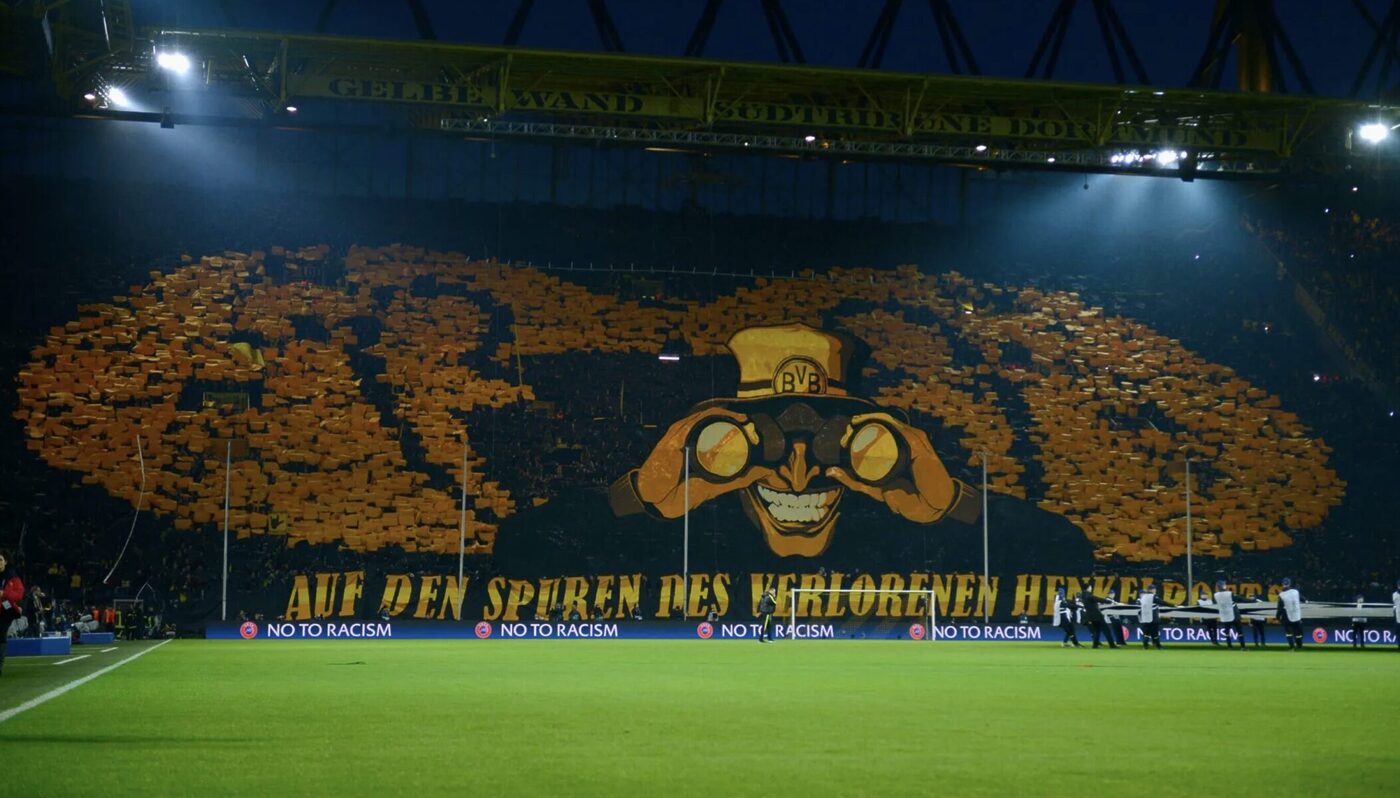
Part of it is generational. Younger fans are less concerned with preserving tradition for its own sake and more open to borrowing ideas from elsewhere. For them, football culture is already global. Wearing a shirt from Argentina, following an Italian ultra group online, or trying to replicate a Dortmund-style display feels not like imitation, but participation. And part of it is practical. English clubs, particularly in the Premier League, now have the infrastructure and resources to support these displays. While tifos are often organised by fan groups, they require coordination with clubs for safety, storage and execution. That relationship has improved in recent years, making it easier for ambitious displays to actually happen.
The effect, when it works, is undeniable. A well-executed tifo does something that noise alone cannot quite achieve. You could see that at Villa Park. Before anything had happened on the pitch, the crowd had made a statement. It was not subtle, and it wasn’t meant to be. Football, at its best, is not a subtle business.
The question now is whether tifos become a permanent part of the English game, or remain an occasional flourish. There are obvious barriers. Large-scale banners and card displays are not cheap, and while Premier League clubs might absorb or support those costs, lower-league sides operate on tighter margins. There is also the question of labour. The most impressive tifos are the result of hours, sometimes days, of volunteer work. Not every fanbase has the time, space or organisation to pull that off regularly.
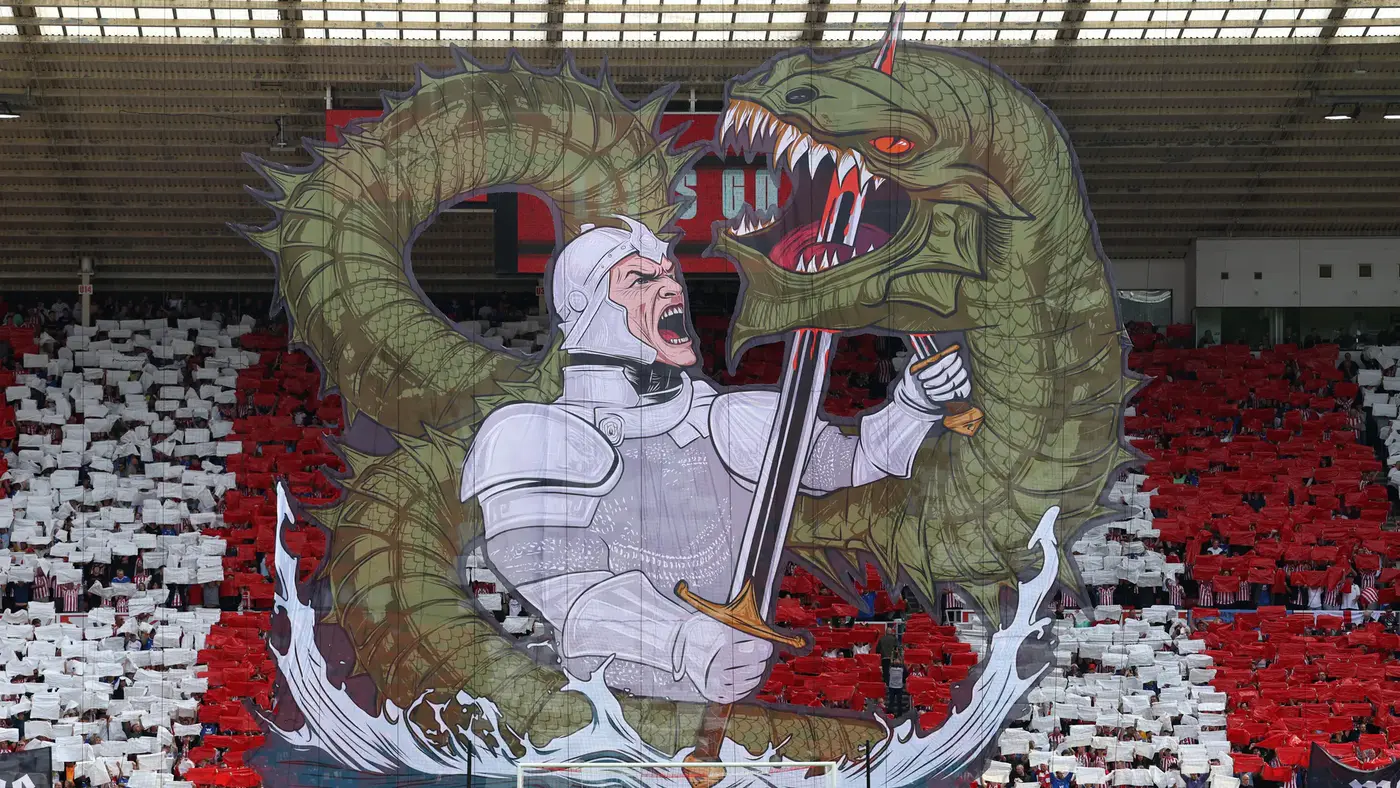
Then there is the matter of fit. English football culture has always valued authenticity, even if that word gets stretched beyond meaning. If tifos start to feel corporate, pre-packaged or overly frequent, they risk becoming background noise rather than something special. The balance is delicate. Done well, they enhance the atmosphere. Done poorly, they feel like a distraction.
Ultimately, tifos are just another way of answering the same old question: how do you show that you care? English football has traditionally answered it with noise, with humour, with stubborn presence through bad results and worse weather. The rest of the world answers it with colour, choreography and scale.
Increasingly, the two are starting to overlap. The banner drops, the image appears, and then the singing starts. Not instead of it, but alongside it. The old and the new, layered together. Which, in its own way, feels extremely British.